Teach Young People Healthy Online Boundaries
November 22, 2025
16 Days of Activism: Preventing and Eliminating Violence against Women and Girls
November 28, 2025BftW and AGIAMONDO CPS Networks Hold Roundtable Engagement on Natural Resource Governance in Makeni, Northern Sierra Leone
By Abdul Kaprr Dumbuya

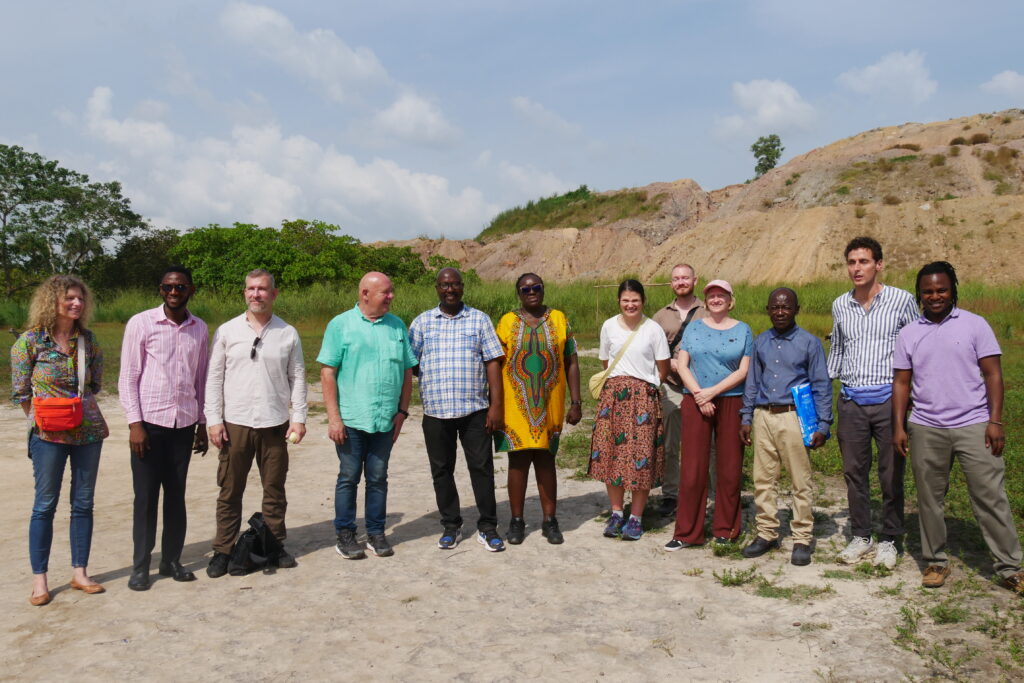
On 18th November 2025, Bread for the World (BftW) and the AGIAMONDO Civil Peace Service (CPS) networks convened a roundtable discussion on natural resource governance for partner organisations in Bombali District, northern Sierra Leone. The engagement aimed to identify key governance gaps affecting government institutions, civil society actors, and local communities, and to explore how CPS partners can collaborate more effectively to address these challenges.
The BftW and AGIAMONDO CPS Programmes—supported by BMZ in Germany—have for years provided funding, technical support, peacebuilding expertise, and long-term partnership accompaniment to help communities manage land, forests, water, and mining-affected areas. Their comparative advantage lies in combining development support with human-rights–oriented advocacy and conflict-sensitive programming that strengthens local governance and community resilience.
Sierra Leone’s natural resources carry immense potential to support economic transformation. Yet, rural communities often find themselves caught between government authorities and powerful multinational corporations, facing the brunt of challenges associated with extractive operations. These challenges include land loss, environmental degradation, inadequate compensation, limited benefit-sharing, exclusion from decision-making, social tensions, and exposure to pollution-related health risks. Such issues persist due to systemic governance weaknesses and significant power imbalances among companies, state actors, and local communities.
In recent years, the Government of Sierra Leone has taken notable steps to improve the environment and natural resource sectors. These include adopting progressive legal frameworks—considered among the most ambitious in Africa—establishing or strengthening relevant agencies, and launching community-based initiatives. Despite these strides, persistent issues remain: illegal and artisanal mining, rapid deforestation, land grabbing, weak enforcement capacity, fragmented governance across ministries, and tensions between statutory and customary land and resource rights.
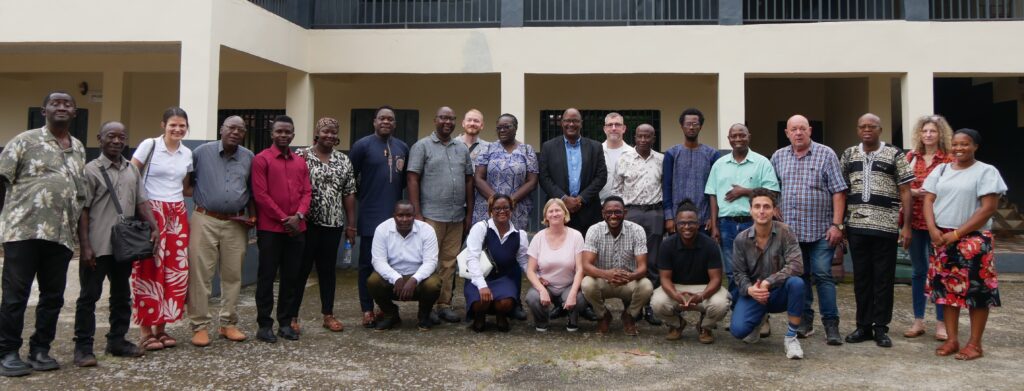
The roundtable was co-organised by the Sierra Leone Network on the Right to Food (SiLNoRF) and the University of Makeni (UniMak), and hosted at the Fatima Campus of UniMak. Both institutions are long-standing partners of BftW and AGIAMONDO, respectively.
In his welcome address, the Vice Chancellor of UniMak, Rev. Fr. Prof. Joseph A. Turay, commended the visiting BMZ team for their continued support toward peace and development initiatives in Sierra Leone. He described their engagement as a vital contribution to the country’s ongoing reconstruction and nation-building efforts.
SiLNoRF’s Deputy National Coordinator, Abass J. Kamara, provided an overview of the current state of natural resource governance in the country, highlighting alleged human rights abuses involving security personnel around gold mining areas in Bumbuna, Tonkolili District. He cited the recent relocation of three (3) communities to make way for mining operations. “…the new settlements are inadequate for the people, as they lack sanitation facilities, prone to disease outbreaks, and have insufficient farmland”, he reiterated. Abass further disclosed that residents reportedly faced violence, detention and sometimes loss of lives when they protested these conditions.
Gerald Alex Sesay from UniMak, who moderated the session, also informed participants about the reported arrest and detention of more than twenty (20) community members in the Marampa Mines concession area in Port Loko District. The affected residents were said to have been protesting unpaid compensation, road reconstruction delays, and limited employment opportunities.
Participants engaged in a deep and candid discussion, reflecting on the broader governance issues and systemic challenges facing the natural resource sector. Many attributed the persistent problems to limited political will, while others pointed to the role and influence of local authorities, who are widely regarded as powerful custodians of land in rural areas.
At the end of the engagement, partners agreed to continue organising similar joint discussions to strengthen collaboration and develop a more coordinated advocacy approach. Participants further recommended increased BMZ support to enhance the capacities of civil society partners in both networks, enabling them to undertake evidence-based advocacy in support of government reforms and community interests.


