

In Liberia, Faith Leaders Urge Dialogue to End Legislative Crisis
March 4, 2025
Liberian women call for accelerated actions to end gender based violence in Liberia
March 8, 2025LDS Prepares Farmers for Sustainable Agriculture Practices
Forty Farmers from Salayea District, Lofa County have undergone training in sustainable agricultural practices under the Community Livelihood Assistance Project (CLAP).
CLAP is being funded by Bread for the World, Berlin, and implemented by the Lutheran Development Service in 8 communities in Salayea District, Lofa County.
Trainers used the Farmer Field School (FFS) approach during the training to help demonstrate practical skills and knowledge during the training. FFS is a participatory and interactive approach to agricultural education and extension. It empowers farmers with knowledge, skills, and resources to improve productivity and sustainability in agriculture by practically demonstrating on the farm site.
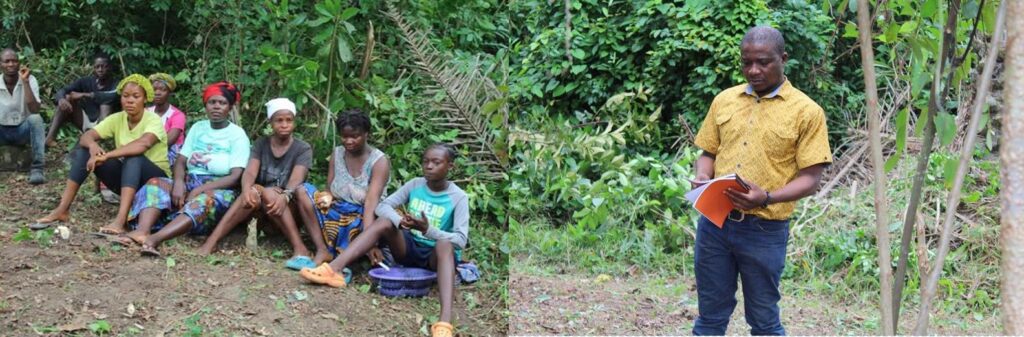
The training program equips farmers with practical knowledge and skills in crop management, pest control, soil health, and sustainable practices. Farmers are introduced to eco-friendly and sustainable farming practices, such as integrated pest management (IPM) and organic farming. This helps farmers reduce dependency on chemical inputs, improve environmental health and long-term agricultural viability.
Additionally, by adopting improved techniques, farmers can increase crop yields and reduce production costs. These techniques enhances productivity leading to better marketability and income for farming households
It also fosters group learning and collective problem-solving, enhancing social cohesion among farmers. Farmers learn to observe and analyze their fields critically, enabling them to make informed decisions tailored to local conditions.
The Farmer Field School training is tailored to address specific challenges faced by farmers during the project, making the learning relevant and practical. Through adaptive practices taught in the FFS, farmers will be able to cope better with challenges posed by climate variability, such as drought, floods, and changing pest patterns.
Farmer Field School Training also provides a platform for farmers to experiment with new techniques, seed varieties, and technologies, fostering a culture of innovation and continuous improvement.
Beyond farming, the FFS training also addressed social issues, such as health, nutrition, and financial literacy, contributing to holistic community development.